10 Innovative Social Media Marketing Techniques that Drive Engagement

Social media marketing has become indispensable in today’s digital landscape, where brands compete for attention in an increasingly saturated environment. The ability to innovate and adapt your approach is what separates successful campaigns from those that fade into obscurity. By implementing innovative techniques, marketers can capture audience attention, foster meaningful connections, and ultimately drive measurable engagement that translates to business results.
Content Creation: Crafting Compelling Narratives
The Foundation of Engagement
Creative and unique content remains the cornerstone of effective social media marketing. However, the approach to content creation is evolving significantly. Rather than focusing heavily on polished, product-centric messaging, audiences now prioritize authenticity, relatability, and entertainment. This shift demands that marketers move away from overly promotional content and instead create stories that resonate on a human level.
Diverse Content Formats for Maximum Impact
Successful content strategies leverage multiple formats tailored to specific platforms. For TikTok, create vertical, short-form videos incorporating popular sounds, hashtags, and trends like challenges and duets to boost engagement. On Instagram, focus on short, trendy Reels with music, effects, and relevant hashtags, while Stories provide opportunities to share time-sensitive or exclusive content. Facebook benefits from different content formats with engaging captions tailored to your audience’s interests, while LinkedIn requires a more professional and detailed tone.
The key to successful content creation is consistency paired with originality. Brands should experiment with current trends while maintaining a flexible content calendar that allows room for both established strategies and experimental posts.
Audience Insights: Understanding Your Community
Leveraging Social Listening Tools
Understanding your audience is foundational to driving engagement. Social listening goes beyond simple monitoring—it involves using social listening tools to gauge current audience behavior and sentiment across platforms and tracking the performance of recent campaigns to identify what resonates. This data-driven approach transforms social media from a guessing game into a strategic channel grounded in evidence.
Predictive Analytics and Strategic Planning
Forward-thinking marketers incorporate predictive analytics to make informed decisions about future content and strategies. By analyzing which types of content generate the most engagement, shares, and conversions, you can refine your approach continuously. This methodology ensures that your social media efforts are directly tied to business goals—something that 65% of marketing leaders identify as crucial for securing social investment.
Looking to enhance your digital marketing strategy beyond social media? Check out our guide on revolutionary marketing automation hacks that complement your social efforts perfectly.
Influencer Partnerships: Expanding Reach Authentically
Strategic Collaboration Models
Influencer partnerships have evolved beyond simple sponsorships. Rather than exclusively pursuing mega-influencers, collaborations with micro-influencers offer more authentic connections with engaged audiences. These partnerships work particularly well when influencers genuinely use and believe in your products or services.
Identifying the Right Partners
The most effective influencer partnerships begin with identifying creators whose audiences align with your target market. If a customer creates positive content about your product, don’t be afraid to leverage them as an influencer by connecting with them to see if they can share content in the future for other products you offer. This organic approach to influencer relationships often yields better results than transactional arrangements, as audiences can sense authenticity.
Outbound Engagement Strategy
An emerging tactic gaining traction is strategically commenting on creator content, which helps brands cultivate community while also putting their brand in front of new audiences. This “outbound engagement” approach positions your brand as a participant in conversations rather than merely a broadcaster, fostering genuine community connections.
Social Listening: Staying Ahead of Trends
Beyond Monitoring to Strategic Insight
Social listening represents one of the top social media trends for 2025. It goes beyond simply tracking brand mentions to understanding broader market sentiment, emerging trends, and competitor strategies. Social listening launches social professionals into their performance marketing era by connecting social insights directly to measurable business outcomes.
Tools and Implementation
Effective social listening involves identifying which conversations matter most to your audience, monitoring competitor activities, and spotting emerging trends before they become mainstream. By understanding what your audience discusses, questions, and values, you can create content that addresses actual needs rather than assumed ones. This approach transforms social listening from a defensive tool (tracking brand reputation) into an offensive strategy for market leadership.
Engaging Posts: The Elements That Spark Interaction
Visual and Interactive Components
The most engaging social media posts combine compelling visuals with interactive elements. Interactive content such as polls and Q&A sessions encourage audience participation and feedback. These formats transform passive scrolling into active engagement, creating opportunities for direct dialogue between brands and audiences.
User-Generated Content as Social Proof
One of the most powerful engagement drivers is user-generated content (UGC), which involves your audience and creates a sense of belonging. By featuring content created by customers—including customer reviews and testimonials, photos and short-form videos, social media posts, contests and challenges, and hashtag campaigns—you showcase real experiences and provide authentic social proof.
Storytelling and Humanization
Humanizing content strengthens connection with your audience. This can be accomplished through behind-the-scenes glimpses, employee stories, customer testimonials, and personal anecdotes. Sharing your brand’s journey, major milestones, and achievements invites followers to celebrate with you, fostering authenticity that resonates far more than traditional marketing messages.
Want to maximize your social media engagement? Explore our article on 5 proven social media tactics for complementary strategies.
Video Marketing: The Dominant Format
Short-Form Video Dominance
Video remains king in the social media landscape. Short-form video content for platforms like Instagram Reels and TikTok represents one of the most effective engagement strategies. These formats capitalize on decreasing attention spans while maintaining high engagement rates across demographics.
Interactive and Shoppable Video Experiences
Video marketing extends beyond passive viewing. Behind-the-scenes footage humanizes your brand, tutorials and how-to videos educate customers, and shoppable videos (interactive videos allowing direct purchases) drive conversions. Live video deserves special mention, as it offers real-time interaction opportunities that can significantly boost engagement.
Platform-Specific Strategies: Playing to Each Channel’s Strengths
Leverage Unique Features
Each social platform has distinct culture, audience expectations, and capabilities. Use platform-specific features such as Instagram Stories, Twitter threads, or Facebook Live—these tools provide unique ways to engage audiences that aren’t possible on other networks. Rather than creating identical content across platforms, adapt your messaging and format to match each channel’s native strengths.
Expansion to Emerging Networks
As newer platforms evolve, they create testing grounds for innovative content strategies. Emerging networks are becoming opportunities to experiment, with platforms like Threads gaining traction through their focus on short, threaded conversations, providing a more nuanced and interactive experience. Early adoption on emerging platforms can position your brand as innovative while reaching audiences with less competition than established networks.
Artificial Intelligence: Solving Creative Challenges
AI as a Productivity Multiplier
Artificial intelligence has become a major asset in social media marketing. 69% of marketers now see AI as revolutionary technology that can create job opportunities, and social marketers are adopting countless generative AI tools to help with creativity and impact. Most notably, use of generative AI for social media content creation has shot way up.
Practical AI Applications
AI tools can predict customer behavior, optimize ad placements, and generate dynamic content. Rather than replacing human creativity, these tools handle routine tasks, optimize targeting, and enhance personalization—freeing marketing teams to focus on strategic and creative work. Half of marketing leaders say they’ll spend 2025 maximizing the AI tools they’ve already purchased and 48% want to invest in more.
For broader digital marketing strategies that complement your social media efforts, check out our digital marketing masterclass article.
Data-Driven Decision Making: Proving Social ROI
Connecting Social to Business Goals
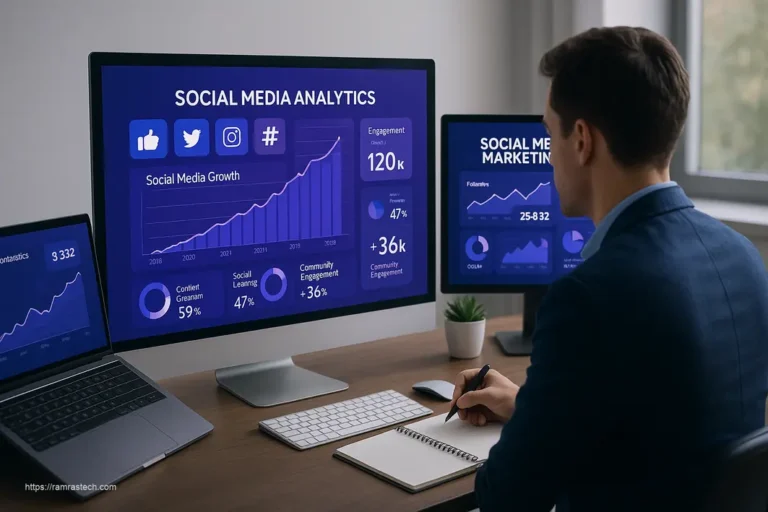
One of the most significant trends for 2025 is the increased emphasis on data-driven social media strategy. Marketers will be more data-driven than ever, with 65% of marketing leaders saying demonstrating how social media campaigns are tied to business goals is crucial for securing social investment. This requires moving beyond vanity metrics (likes and shares) to meaningful measurements tied to revenue, customer acquisition, and retention.
Visualization and Reporting
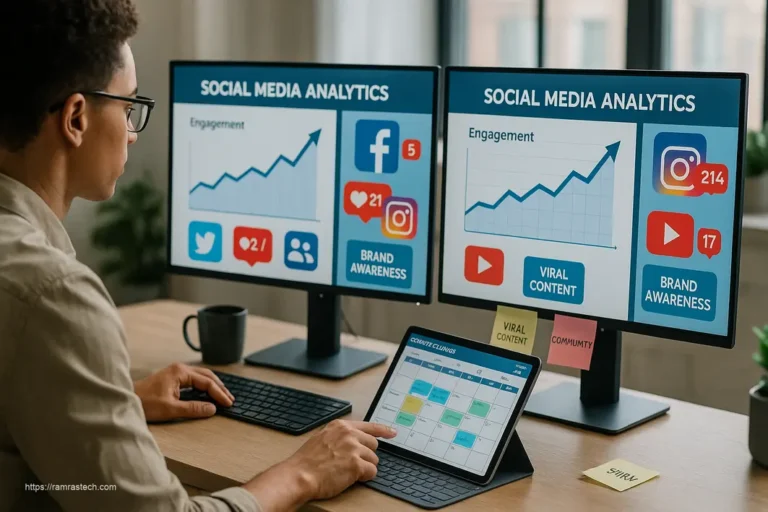
Sharing social data via dashboards or data visualizations helps stakeholders understand social media’s impact. By quantifying cost savings, measuring customer lifetime value from social-acquired customers, and tracking conversion rates, you build the business case for continued social media investment.
Need help understanding analytics? Our introduction to Google Analytics offers valuable insights to complement your social media measurement efforts.
Content Experimentation: Pushing Creative Boundaries
The Creative Disruption Approach
A notable 2025 trend involves social teams ditching brand consistency to push creative boundaries. While brand guidelines remain important, successful teams reserve space for experimental content that tests new formats, messaging approaches, and creative styles. This experimentation provides valuable data about what resonates while positioning your brand as innovative.
Testing and Learning Framework
Implement a systematic approach to content experimentation: test new formats, measure performance, learn from results, and scale what works. This A/B testing mindset transforms social media marketing from an art into a science, where decisions are based on evidence rather than intuition alone.
Conclusion: Building Your Integrated Strategy
The ten innovative social media marketing techniques discussed—from authentic content creation and social listening to influencer partnerships, video marketing, and AI-powered optimization—work together as an integrated system. The most successful brands don’t implement these tactics in isolation; instead, they weave them together strategically.
The social media landscape continues to evolve rapidly. What works today will need refinement tomorrow. The brands that thrive are those that remain committed to continuous experimentation, measurement, and adaptation. As you implement these techniques, remember that authenticity, relatability, and entertainment consistently outrank polished, product-centric messaging in audience preferences.
Next Steps
Now is the time to audit your current social media strategy against these ten techniques. Identify which areas represent your greatest opportunities for improvement and which align best with your resources and audience. Test new approaches systematically, track results meticulously, and be prepared to pivot based on what the data reveals.
Share your experiences with these techniques in the comments—what’s worked best in your social media marketing efforts? Subscribe to stay updated as the social media landscape continues to evolve, ensuring your strategies remain innovative and effective in an increasingly competitive digital environment.
FAQs About Social Media Marketing Techniques
What is the most effective social media platform for B2B marketing?
LinkedIn consistently outperforms other platforms for B2B marketing, with 80% of B2B social media leads coming from the platform. However, a multi-platform approach that includes Twitter for industry news engagement and YouTube for detailed product demonstrations often yields the best results. The key is to understand where your specific audience spends their professional time online.
How often should businesses post on social media?
Optimal posting frequency varies by platform: LinkedIn benefits from 3-5 weekly posts, Instagram performs well with 3-7 posts weekly, Twitter can handle 1-5 daily tweets, and Facebook works best with 3-5 weekly posts. However, consistency and quality always trump quantity. It’s better to maintain a sustainable posting schedule with high-quality content than to overwhelm your audience with frequent but mediocre posts.
How can small businesses compete with larger brands on social media?
Small businesses can effectively compete by leveraging their agility and authenticity. Focus on building deep connections within niche communities rather than broad reach, showcase your unique brand personality, leverage user-generated content, and engage directly with your audience. Small businesses often excel at creating personal connections and responding quickly to trends—advantages that many larger brands struggle to match despite bigger budgets.
What metrics should I track to measure social media marketing success?
Look beyond vanity metrics like follower counts to track engagement rate, click-through rate, conversion rate, cost per acquisition, and customer lifetime value from social channels. The most important metrics align with your specific business goals—whether building brand awareness (reach, impressions, share of voice), generating leads (form completions, email signups), or driving sales (conversions, revenue attributed to social).