5 Revolutionary Marketing Automation Techniques to Boost ROI
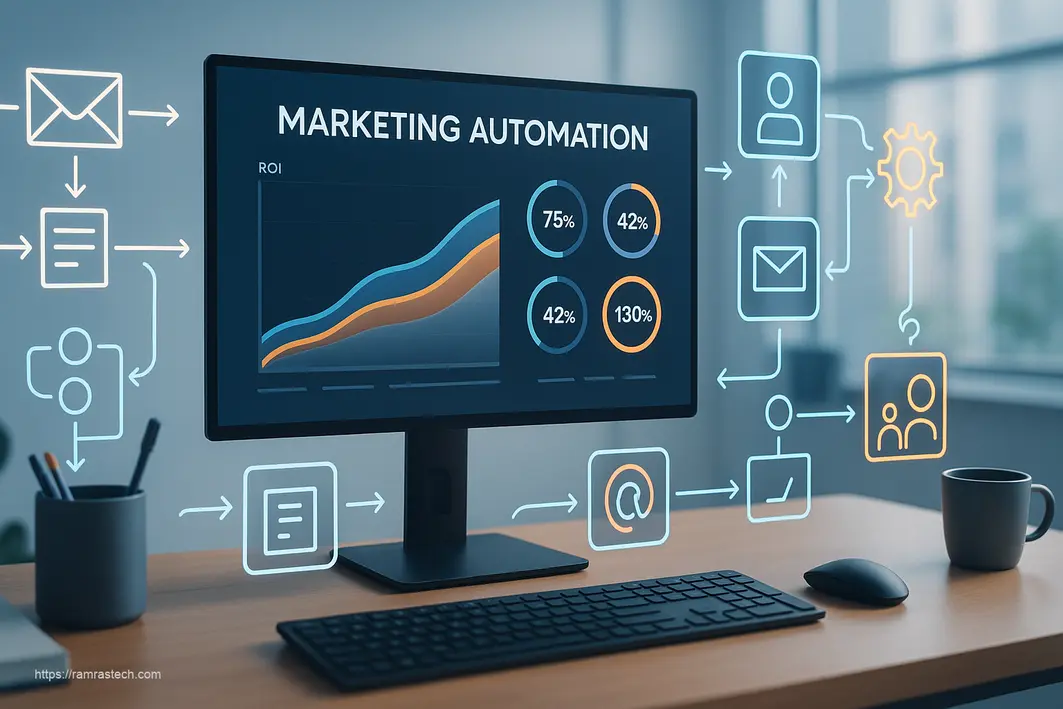
Ever wonder how top marketers seem to be everywhere at once? Engaging customers across multiple channels, responding instantly to behaviors, and somehow maintaining personalized communication with thousands of leads? The secret isn’t superhuman abilities or massive teams—it’s strategic marketing automation techniques that amplify their efforts exponentially.
In today’s digital landscape, marketing automation has evolved from a nice-to-have luxury to an absolute necessity for businesses hoping to stay competitive. The numbers speak for themselves: companies implementing smart automation see an average return of $5.44 for every $1 spent—a staggering 544% ROI. Yet many organizations are still barely scratching the surface of what’s possible.
This guide explores five game-changing marketing automation techniques that don’t just streamline your operations but fundamentally transform how you connect with audiences and drive measurable results.
Understanding Marketing Automation: Beyond the Buzzword
Before diving into specific techniques, let’s clarify what marketing automation really means in 2025. Gone are the days when automation simply meant scheduling social media posts or sending basic email sequences.
Today’s marketing automation encompasses sophisticated platforms and tools that streamline, automate, and measure marketing tasks across multiple channels. The core components typically include email automation systems, CRM integration capabilities, intelligent lead scoring mechanisms, intuitive workflow builders, and comprehensive analytics dashboards.
The benefits extend far beyond mere convenience:
- Supercharged lead generation: Companies using automated lead nurturing see up to 451% more qualified prospects entering their pipeline.
- Enhanced campaign efficiency: Teams execute more relevant campaigns at greater scale without proportional increases in workload.
- Data-driven optimization: Real-time analytics enable continuous improvement, with each campaign becoming smarter than the last.
Now, let’s explore the five specific techniques transforming marketing automation from a simple time-saver into a revenue-generating powerhouse.
Technique 1: AI-Powered Email Marketing Automation
Email remains the workhorse of digital marketing, but today’s automated email marketing bears little resemblance to the batch-and-blast approaches of years past.
How It Works
Modern email automation uses sophisticated behavioral triggers and data insights to deploy highly relevant messages at precisely the right moment in the customer journey. Unlike manual campaigns, these emails respond to specific actions (or inactions) in real-time—whether that’s abandoning a cart, browsing a particular product category, or reaching a milestone in their relationship with your brand.
The ROI Impact
The numbers here are striking:
- Automated emails achieve open rates up to 42% (compared to 18% for non-automated campaigns)
- Click-through rates average 5.4% (versus 2.1% for traditional campaigns)
- Conversion rates can increase by nearly 400%
Why such dramatic differences? Relevance and timing. When a message arrives at precisely the moment a prospect is considering a decision, it doesn’t feel like marketing—it feels like helpful service.
Implementation Examples
- Sophisticated drip campaigns that adjust content based on engagement patterns
- Abandoned cart recovery sequences that recapture lost revenue
- Onboarding journeys that gradually educate new customers about product features
- Re-engagement campaigns targeting dormant contacts with personalized incentives
“The most effective email automation doesn’t just push messages out—it creates conversations that evolve based on customer responses,” explains marketing automation expert David Ross. “Each interaction should inform the next.”
Technique 2: Strategic CRM Integration for Omnichannel Orchestration
While email automation delivers impressive results, its impact multiplies when integrated with a comprehensive CRM system that orchestrates experiences across all channels.
The Unified Customer View
Modern CRM integration creates what marketers call a “360-degree customer profile”—a complete picture of each contact’s interactions, preferences, and history across every touchpoint. This unified data foundation enables truly cohesive marketing that feels consistent to customers whether they’re seeing an email, social media ad, or speaking with sales.
How Integration Transforms ROI
The business impact is substantial:
- Teams using integrated CRMs report 87% higher confidence in their marketing strategy (versus 52% without integration)
- Customer retention rates increase by 26% on average
- Cross-selling and upselling effectiveness improves by 32%
Perhaps most importantly, integration eliminates the disjointed experiences that frustrate customers and damage brand perception. When your social media team, email marketers, and sales representatives all work from the same customer data, the experience feels seamless rather than fragmented.
Implementation Best Practices
- Prioritize bidirectional data synchronization between systems
- Create standardized data fields for consistent personalization
- Develop cross-channel trigger workflows that coordinate messaging
- Implement regular data hygiene processes to maintain accuracy
A critical consideration when implementing CRM integration is selecting compatible systems. “The technical architecture matters tremendously,” notes systems integration specialist Maya Chen. “The best integrations feel invisible to both marketers and customers—they just work.”
Technique 3: Automated Conversion Rate Optimization
The third revolutionary technique moves beyond communication to optimize the actual conversion points in your marketing funnel through systematic, automated testing.
The Continuous Improvement Engine
Automated conversion optimization uses AI-powered platforms to continuously test, measure, and refine key conversion elements—from email subject lines to landing page layouts, CTAs, and checkout processes. Unlike traditional A/B testing which requires manual setup and evaluation for each element, automated systems can run multiple simultaneous experiments and implement winning variations in real-time.
The Revenue Impact
The financial case for automated optimization is compelling:
- Companies leveraging automation for CRO typically see conversion rate improvements of 10%+ within 6-9 months
- Average order values increase by 8-15% through optimized upsell sequences
- Testing velocity increases by 300-400%, accelerating learning and improvement
For high-volume businesses, even small percentage improvements in conversion rates translate to substantial revenue gains. A SaaS company processing 10,000 monthly visitors might generate hundreds of thousands in additional annual revenue from a seemingly modest 2% conversion improvement.
Implementation Strategies
- Dynamic landing pages that adapt content based on traffic source, user history, or demographic data
- Multivariate testing platforms that analyze element combinations rather than simple A/B comparisons
- Heat mapping and session recording tools that automatically flag user experience issues
- Personalized checkout experiences that dynamically adjust based on cart value, customer history, or abandonment risk
When implementing automated conversion optimization, prioritize high-traffic, high-value conversion points first. “Focus your initial testing on pages with enough volume to generate statistically significant results quickly,” advises CRO specialist Jennifer Martinez. “Early wins build momentum for broader optimization efforts.”
Technique 4: Intelligent Lead Nurturing Workflows
The fourth transformative technique involves sophisticated lead nurturing—the systematic process of developing relationships with prospects across the buying journey through highly personalized, automated communication sequences.
Beyond Basic Drip Campaigns
Today’s intelligent nurturing goes far beyond the simple time-based drip campaigns of the past. Modern systems use behavioral scoring, engagement patterns, and predictive analytics to deliver the right content through the right channel at precisely the right moment in the buyer’s journey.
The Business Impact
The ROI implications are substantial:
- Companies with mature lead nurturing programs generate 50% more sales-ready leads at 33% lower cost
- Nurtured leads make 47% larger purchases than non-nurtured leads
- The lead-to-customer conversion rate improves by 20% on average
Perhaps most importantly, automated nurturing allows marketing teams to maintain meaningful relationships with prospects who aren’t yet ready to buy—keeping your brand top-of-mind until the timing is right.
Implementation Approaches
- Multi-channel nurture flows that coordinate messaging across email, social, web, and even direct mail
- Content-based nurturing that adapts based on resource downloads and content consumption patterns
- Intent-based sequences triggered by high-value behaviors indicating purchase readiness
- Account-based nurturing for B2B environments, targeting multiple stakeholders within key accounts
“The most effective nurturing doesn’t feel like marketing at all,” notes pipeline marketing expert Carlos Hidalgo. “It feels like a helpful resource appearing exactly when needed.”
Technique 5: AI-Powered Predictive Personalization
The final and perhaps most revolutionary technique leverages artificial intelligence to anticipate customer needs and personalize experiences at a scale and sophistication impossible with traditional rules-based approaches.
Machine Learning Meets Marketing
Predictive personalization uses machine learning algorithms that continuously analyze customer behavior patterns, identifying subtle correlations and preferences that would be invisible to human marketers. These systems then automatically generate highly tailored content, recommendations, and experiences for each individual.
The Competitive Advantage
The business impact of AI-powered personalization is profound:
- Companies using advanced AI for marketing report revenue increases of 10-30%
- Customer engagement metrics increase by 40% on average
- Retention rates improve by 13-22% compared to standard segmentation
In highly competitive markets, this level of personalization creates a significant competitive moat. As AI systems learn from each interaction, they continuously improve—creating a virtuous cycle that’s difficult for competitors to replicate quickly.
Implementation Examples
- Predictive content recommendations that anticipate the most relevant resources for each prospect
- Dynamic pricing optimization that adjusts offers based on purchase likelihood and customer value
- Next-best-action engines that suggest the optimal next step in the customer journey
- Churn prediction and prevention workflows that identify at-risk customers before they leave
When implementing AI-driven personalization, start with focused use cases rather than attempting comprehensive personalization immediately. “Begin with a single high-value customer segment and one key touchpoint,” recommends AI implementation specialist Rajiv Patel. “Master that before expanding to broader applications.”
Putting It All Together: The Integrated Automation Ecosystem
While each of these five techniques delivers substantial value independently, their true transformative power emerges when implemented as an integrated ecosystem. Email automation feeds data to your CRM, which informs conversion optimization efforts, which refine lead nurturing workflows, all enhanced by AI-powered personalization.
This interconnected approach creates a marketing engine that continuously improves, adapting to changing customer behaviors and market conditions without constant manual intervention.
Implementation Roadmap
For organizations just beginning their marketing automation journey, this comprehensive vision can feel overwhelming. A pragmatic implementation roadmap might look like:
- Foundation (Months 1-3): Implement basic email automation and CRM integration
- Expansion (Months 4-6): Add automated lead nurturing workflows
- Optimization (Months 7-9): Implement conversion optimization testing
- Intelligence (Months 10-12): Begin integrating AI-powered personalization
Remember that marketing automation is a journey, not a destination. The most successful programs evolve continuously, with regular reviews and optimizations to ensure maximum ROI.
Measuring Success: Beyond Basic Metrics
As you implement these advanced marketing automation techniques, standard metrics like open rates and click-through rates become insufficient for measuring true business impact. A more comprehensive measurement framework should include:
- Pipeline velocity: How quickly leads move through your funnel
- Customer acquisition cost (CAC): Total marketing and sales expense per new customer
- Customer lifetime value (CLV): Projected revenue from each relationship
- Marketing efficiency ratio: Revenue generated per dollar of marketing spend
- Attribution analysis: Understanding which channels and tactics drive conversions
These metrics provide a clearer picture of how automation affects your bottom line and helps identify opportunities for further optimization.
Frequently Asked Questions About Marketing Automation Techniques
What size business benefits most from marketing automation?
While enterprises were early adopters, businesses of all sizes now benefit from automation. Small businesses gain particular advantage from automation’s ability to execute sophisticated marketing with limited staff. The key is selecting right-sized solutions—starting with core capabilities and expanding as your needs grow.
How long does it take to see ROI from marketing automation?
Initial results typically appear within 3-6 months, with email automation and lead nurturing generally delivering the fastest returns. More advanced techniques like AI-powered personalization may take 9-12 months to reach full effectiveness as systems gather sufficient data to generate accurate predictions. Most companies see positive ROI within the first year of implementation.
What’s the biggest implementation challenge with marketing automation?
Data quality consistently ranks as the primary challenge. Automation systems require clean, consistent data to function effectively. Before implementation, audit your existing data and establish governance processes to maintain quality. Many organizations underestimate the importance of data hygiene until automation exposes existing issues.
How does marketing automation affect team structure?
Successful automation typically shifts team focus from tactical execution to strategic optimization. Rather than creating and sending individual campaigns, team members spend more time analyzing results, refining customer journeys, and developing content. This evolution often requires upskilling existing team members or adding analytics talent.
Conclusion: The Competitive Necessity of Advanced Automation
As we’ve explored, marketing automation has evolved far beyond simple time-saving tools into sophisticated systems that fundamentally transform marketing effectiveness and efficiency. The five techniques covered—AI-powered email automation, strategic CRM integration, automated conversion optimization, intelligent lead nurturing, and predictive personalization—represent the current frontier of what’s possible.
Implementing these advanced approaches isn’t just about staying current with marketing trends. In increasingly competitive markets with rising customer acquisition costs, sophisticated automation has become a competitive necessity rather than a luxury. Organizations that master these techniques gain significant advantages in efficiency, personalization, and ultimately, revenue growth.
The good news? The technology has never been more accessible. Platforms that once required enterprise budgets and technical teams are now available to organizations of all sizes, with increasingly user-friendly interfaces and pre-built templates accelerating implementation.
The question isn’t whether your organization should adopt advanced marketing automation—it’s how quickly you can implement these techniques before competitors gain an insurmountable advantage.
Ready to transform your marketing ROI with powerful automation? Learn how our team can help you implement these game-changing marketing automation strategies tailored to your specific business needs.