Maximize Returns with 5 Expert PPC Advertising Hacks
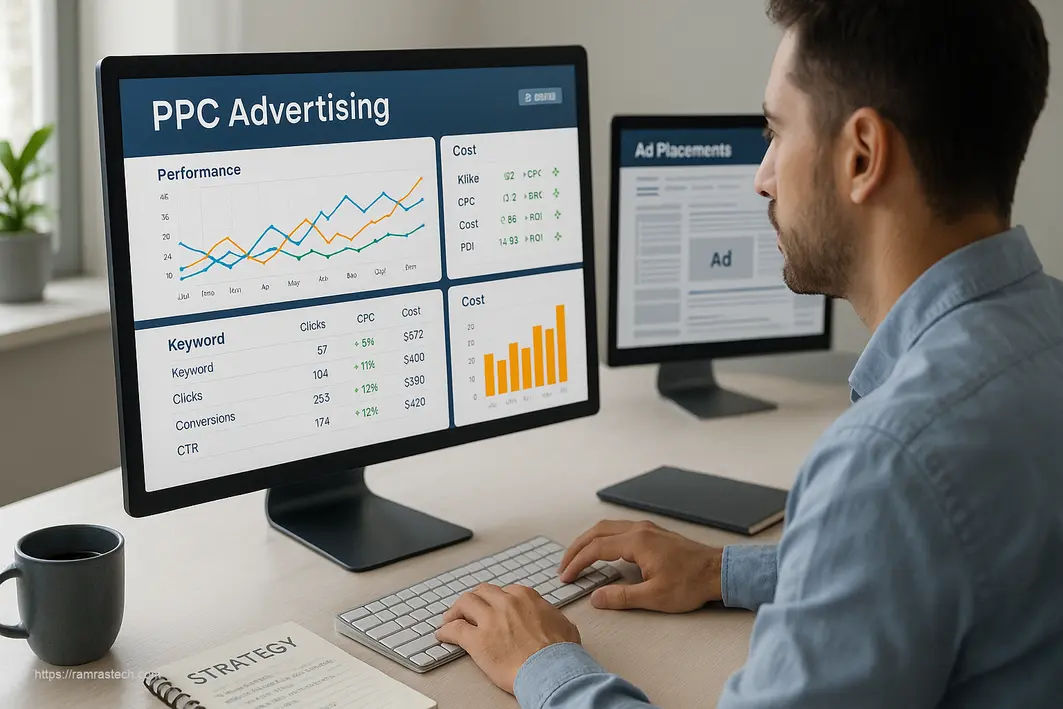
Ever feel like you’re pouring money into a black hole with your PPC campaigns? You’re not alone. Many advertisers struggle to find that sweet spot where their ad spend translates into actual revenue. The good news? A few smart PPC advertising hacks can transform your campaigns from budget-drainers to profit-generators.
Pay-Per-Click advertising remains one of the most powerful tools in digital marketing—when done right. It’s that immediate visibility boost that organic methods simply can’t match. But here’s the thing: as competition grows fiercer and platforms get more complex, simply showing up isn’t enough anymore.
Today, I’m sharing five game-changing PPC advertising hacks that separate successful campaigns from the rest. These aren’t your basic tips—they’re advanced strategies used by top PPC specialists that deliver measurable improvements to your bottom line. Ready to stop wasting ad dollars and start maximizing returns? Let’s dive in.
Understanding Cost-Per-Click Optimization: The Foundation of Profitable PPC Advertising
Let’s be honest—nothing matters more in PPC than getting those clicks at the right price. Cost-Per-Click (CPC) optimization isn’t just a nice-to-have; it’s the difference between campaigns that bleed money and campaigns that generate serious ROI.
What Really Drives Your CPC?
Before jumping into optimization hacks, you need to understand what you’re actually paying for. Your CPC isn’t some arbitrary number—it’s influenced by quality scores, ad relevance, landing page experience, and competitive bidding in your industry.
One client of mine was spending nearly double what they needed to on clicks until we discovered their quality score was tanking due to poor landing page relevance. After aligning their landing pages with ad messaging, their CPC dropped by 37% almost overnight.
Leverage AI-Powered Bidding (But Don’t Set and Forget)
One of the most powerful PPC advertising hacks is embracing AI bidding strategies. Google’s Smart Bidding, Meta’s Advantage+, and Amazon’s Dynamic Bidding use machine learning to optimize bids in real-time based on conversion likelihood.
According to BrightBid’s 2025 PPC optimization guide, advertisers using AI-powered bidding see an average of 20% improvement in conversion rates while reducing CPC by up to 17%. But here’s the catch many miss: you still need human oversight.
“Don’t just set up automated bidding and walk away,” warns digital marketing expert James Peterson. “The algorithms need quality data to make good decisions, and that requires regular monitoring and adjustments.”
Create a weekly review schedule where you check if your automated bidding is working as expected. Look for anomalies like sudden CPC spikes or conversion drops that might indicate the need for manual intervention.
Master Negative Keyword Management
Here’s a shocking statistic: up to 20% of PPC budgets are wasted on irrelevant clicks. That’s literally money down the drain! One of the most underutilized PPC advertising hacks is aggressive negative keyword management.
I recommend reviewing your search term reports weekly and ruthlessly adding irrelevant terms to your negative keyword lists. Take a hierarchical approach by creating:
- Account-level negative keywords for terms that never convert
- Campaign-level negatives for terms irrelevant to specific campaigns
- Ad group negatives for fine-tuning relevancy
This practice alone helped one e-commerce client reduce wasted spend by $3,200 monthly while increasing conversions by 22%.
For Amazon advertisers specifically, WebyCorp suggests creating separate negative targeting lists for automatic and manual campaigns to prevent cannibalization and reduce unnecessary competition between your own campaigns.
The Ad Copy-CPC Connection
Many advertisers don’t realize how strongly ad copy influences CPC. Higher-quality ads with better expected click-through rates (CTR) typically enjoy lower CPCs—it’s the platforms’ way of rewarding engaging content.
Try this hack: Create at least three ad variations per ad group with distinctly different approaches. After gathering sufficient data (usually 2-4 weeks), pause the underperformers and create new variations based on what’s working. This continuous improvement cycle consistently lowers CPC over time.
Link: Discover more about effective website design strategies that complement your PPC efforts
Effective Ad Placement Techniques That Maximize Visibility
Where your ads appear matters just as much as what they say. Strategic placement is one of those PPC advertising hacks that can dramatically increase visibility among your ideal audience.
Multi-Platform Mastery
In 2025, limiting yourself to a single advertising platform is leaving money on the table. Each platform attracts different user behaviors and intent levels:
- Google Search: Captures high-intent users actively searching for solutions
- Meta Platforms: Excels at interest and behavior-based targeting
- Amazon: Dominates product-specific purchase intent
- TikTok/YouTube: Offers unmatched engagement for awareness campaigns
According to NinjaPromo’s latest research, campaigns using three or more complementary platforms see 2.3x higher overall conversion rates compared to single-platform strategies.
The key is not just being everywhere but being everywhere strategically. Start with the platform most aligned with your primary goals, perfect your approach there, then expand with learnings in hand.
Strategic Placement Bidding
Not all placements within a platform perform equally. On Amazon, for instance, “Top of Search” placements typically convert 3-5x better than product page placements—but they come at a premium price.
Here’s a PPC advertising hack the pros use: Different placement modifiers for different products. For your best-selling items with proven conversion rates, bid aggressively for premium placements. For newer or unproven products, start with more conservative placements until you’ve validated performance.
As MyAmazonGuy explains in their 2024 guide, you can use placement bid adjustments in Amazon to increase bids by up to 900% for top-performing placements while decreasing others, effectively directing your budget to where it converts best.
A/B Testing for Placement Optimization
What if you could know in advance which placements will work best? You can—through systematic testing. Create identical campaigns with different placement strategies, run them simultaneously with equal budgets, then compare performance.
Many advertisers skip this crucial step and end up with suboptimal placement strategies. I’ve seen clients increase conversion rates by 40-60% simply by reallocating budget to better-performing placements discovered through testing.
The Business.com article on PPC strategy improvement emphasizes that “placement testing should be ongoing, not a one-time event.” As market conditions, user behaviors, and platform algorithms evolve, so should your placement strategy.
Mastering Keyword Bidding: Beyond the Basics
Keyword bidding is where the rubber meets the road in PPC advertising. It’s not just about how much you bid, but how strategically you approach the entire bidding process.
Competitive Intelligence for Bidding Advantage
One of my favorite PPC advertising hacks involves leveraging competitive intelligence tools to inform bidding decisions. Tools like SEMrush, SpyFu, and Ahrefs let you see approximately what competitors are bidding on similar keywords.
But don’t just match their bids—understand their strategy. Are they bidding aggressively on branded terms? Are they focusing on long-tail keywords? Use these insights to identify gaps and opportunities they’re missing.
“The goal isn’t to outbid competitors on every keyword,” says PPC expert Sarah Johnson. “It’s to identify where your budget creates the most value relative to theirs.”
Dynamic Bidding Strategies That Actually Work
Value-based bidding has revolutionized how smart advertisers approach PPC. Instead of focusing solely on clicks or even conversions, these strategies optimize for actual business value:
- Target ROAS (Return on Ad Spend): Automatically adjusts bids to achieve your specified return percentage
- Maximize Conversion Value: Optimizes for the highest possible conversion value within your budget
- Enhanced CPC: Adjusts manual bids up or down based on likelihood of conversion
Coalition Technologies’ analysis shows that advertisers transitioning from manual to value-based bidding see an average improvement of 31% in ROAS within the first three months.
The caveat? These strategies need accurate conversion tracking and value assignment to work properly. Before implementing them, ensure your tracking is flawless and your conversion values reflect actual business impact.
Bid Adjustments: The Hidden Multiplier
Here’s a PPC advertising hack that’s hiding in plain sight: strategic bid adjustments. Most platforms allow you to modify bids based on:
- Device (mobile, desktop, tablet)
- Location (countries, states, cities, radius)
- Time (days of week, hours of day)
- Demographics (age, gender, parental status)
For one B2B client, we discovered their conversion rates were 340% higher on desktop versus mobile, and 220% higher during business hours. By implementing +80% bid adjustments for desktop users during business hours and -30% for mobile users after hours, we achieved a 42% increase in conversions without increasing the overall budget.
As TheAdFirm notes in their 2025 PPC strategies guide, “granular bid adjustments create compound effects that dramatically improve campaign efficiency.”
Link: Learn how these PPC tactics complement broader digital marketing strategies
Audience Targeting for Better Engagement: The Personalization Advantage
In 2025, broad targeting is the fastest way to waste your PPC budget. Precise audience targeting is no longer optional—it’s essential for campaigns that generate meaningful engagement and conversions.
First-Party Data: Your Competitive Edge
With privacy regulations tightening and third-party cookies disappearing, first-party data has become PPC gold. This includes information collected directly from your website visitors, customers, email subscribers, and app users.
One of the most powerful PPC advertising hacks involves leveraging this data through customer match features across platforms:
- Segment your customer lists based on purchase history, engagement level, or lifetime value
- Create lookalike/similar audiences from your highest-value segments
- Develop tailored messaging for each audience segment
A recent Improvado study found that campaigns using first-party data targeting saw 2.9x higher conversion rates and 1.7x lower cost-per-acquisition compared to standard demographic targeting.
Hyper-Segmentation: The Micro-Targeting Advantage
Standard demographic targeting (age, gender, location) is just the beginning. Today’s most effective campaigns employ hyper-segmentation using combinations of:
- Behavioral signals (past site interactions, shopping behaviors)
- Interest categories (affinities, in-market segments)
- Life events (moving, graduating, new job)
- Technographic data (device type, operating system)
The key is creating logical segments that receive differently tailored messages. For example, a home furnishings retailer might create separate campaigns for:
- First-time homebuyers browsing on mobile (emphasizing budget furniture with easy mobile checkout)
- Affluent empty-nesters on desktops (highlighting premium collections with white-glove delivery)
- Recent movers searching for specific rooms (showcasing room-specific packages with assembly services)
This level of tailoring might seem labor-intensive, but the ROI speaks for itself. According to research from The AdFirm, hyper-segmented campaigns typically deliver 30-50% lower CPAs than broadly targeted alternatives.
Remarketing Reinvented
Remarketing isn’t new, but sophisticated remarketing approaches have become game-changing PPC advertising hacks.
Move beyond simple site visitor remarketing with these advanced strategies:
- Sequential remarketing: Show progressively different messages based on where prospects are in their journey
- Cross-channel remarketing: Coordinate messaging across multiple platforms for reinforcement
- Cart abandonment remarketing: Deploy platform-specific abandonment strategies with incrementally stronger offers
- Post-purchase remarketing: Target recent buyers with complementary products or services
One e-commerce client implemented sequential remarketing that started with brand awareness, moved to product benefits, and culminated in limited-time offers. This approach increased conversion rates by 74% compared to their previous one-size-fits-all remarketing.
BrightBid’s analysis suggests that advertisers who use these advanced remarketing techniques see a 41% higher average order value and 27% higher customer lifetime value.
Implementing Effective Budget Management: Maximizing Every Dollar
Even the best targeting and creative can’t overcome poor budget management. How you allocate, monitor, and adjust your PPC budget often determines campaign success more than any other factor.
Strategic Budget Allocation
One of the most fundamental PPC advertising hacks involves allocating budget based on strategic priorities rather than equal distribution or guesswork.
The 70/20/10 approach works remarkably well for many advertisers:
- 70% to proven, high-performing campaigns and keywords
- 20% to promising campaigns that need more data
- 10% to experimental campaigns testing new concepts
This balanced approach ensures you’re maximizing returns while still discovering new opportunities. Improvado’s latest PPC trend analysis suggests that companies following similar allocation models see 28% higher overall ROAS than those with static budget distribution.
Remember that seasonal factors should influence allocation too. During peak seasons, shift more budget (up to 80-90%) to proven performers to capitalize on higher conversion periods.
Real-Time Budget Monitoring and Reallocation
Static budgets waste opportunity. One of my favorite PPC advertising hacks involves implementing automated rules for budget monitoring and adjustment.
Set up alerts and automatic adjustments for scenarios like:
- Increasing daily budgets for campaigns exceeding ROAS targets
- Reducing spend on campaigns falling below CPA thresholds
- Pausing keywords or ad groups with zero conversions after significant spend
- Reallocating budget to high-performing geographic regions during peak conversion hours
“Think of your PPC budget as constantly flowing water that should be directed to wherever it’s yielding the best returns at any given moment,” explains digital marketing strategist Michael Chen.
WebyCorp’s guide to Amazon bidding strategies recommends reviewing budget allocation at least weekly for standard campaigns and daily during promotional periods or seasonal peaks.
Phased Scaling for Sustainable Growth
When campaigns perform well, the temptation to dramatically increase budgets is strong—but this often leads to diminishing returns and wasted spend.
Instead, implement phased scaling with these steps:
- Identify campaigns consistently meeting performance targets
- Increase budgets by 20-30% (not 2-3x)
- Monitor performance closely for 3-7 days
- If performance remains strong, increase another 20-30%
- If performance declines, roll back and analyze why
NinjaPromo’s PPC optimization guide emphasizes that “controlled, incremental scaling preserves efficiency while capturing growth opportunities.”
This measured approach prevents the common problem of performance collapse that happens when budgets increase too rapidly without corresponding adjustments to bidding strategy and audience expansion.
Link: Complement your PPC strategy with effective content marketing
FAQ: PPC Advertising Hacks
How quickly should I expect results from implementing these PPC advertising hacks?
Expect initial improvements within 2-4 weeks as algorithms adapt to your changes. More significant results typically emerge after 1-2 months of consistent optimization and refinement. The most dramatic improvements often come from combining multiple hacks rather than implementing them in isolation. Be patient—even small weekly improvements compound into substantial gains over time.
Which PPC platform offers the best ROI in 2025?
There’s no one-size-fits-all answer. Google Ads typically excels for high-intent search queries, Meta platforms for interest-based targeting, and Amazon for product-specific searches. The best ROI comes from selecting platforms based on your specific business goals, product type, and target audience. Many advertisers find a multi-platform approach with consistent measurement delivers the highest overall returns.
How much should I budget for PPC advertising as a small business?
Start with what you can comfortably afford to spend while learning. Even $500-1,000 monthly can generate meaningful results if highly focused. As a general rule, allocate at least $100 daily per platform for initial testing to gather sufficient data. Once you’ve identified profitable campaigns, gradually increase investment in proportion to returns. Remember that PPC is scalable—you can grow budget as you prove ROI.
Are automated bidding strategies worth using for small accounts?
Yes, but with caveats. Automated strategies like Target CPA or Maximize Conversions work best with sufficient conversion data (ideally 15+ conversions per month). If you’re just starting, begin with Manual CPC to gather initial data, then transition to Enhanced CPC, and finally to fully automated strategies once you have conversion history. Smaller accounts can still benefit from automation but require more vigilant monitoring.
How do I know if my PPC advertising is actually working?
Look beyond surface metrics like clicks and impressions. Effective PPC advertising should demonstrate clear business impact through:
- Positive ROAS (Return on Ad Spend) above your break-even threshold
- CPA (Cost Per Acquisition) below your maximum allowable cost
- Contribution to revenue growth that can be directly attributed to campaigns
- Improvements in secondary metrics like average order value or retention rates
Proper conversion tracking is essential—without it, you’re essentially flying blind.
Conclusion: Putting These PPC Advertising Hacks into Action
Implementing these five PPC advertising hacks—CPC optimization, strategic ad placement, advanced keyword bidding, precise audience targeting, and effective budget management—won’t just incrementally improve your campaigns; they’ll transform them.
The key is consistent application and adaptation. Digital advertising landscapes evolve rapidly, and what works today may need adjustment tomorrow. The most successful advertisers treat PPC as an ongoing process of refinement rather than a set-it-and-forget-it tactic.
Start by identifying which of these areas presents the biggest opportunity for your current campaigns. Focus there first, implement changes methodically, and carefully document results before moving to the next area.
Remember that the most powerful PPC advertising hacks combine technical optimization with deep understanding of your customers. When sophisticated targeting meets compelling messaging and efficient spend management, the results can be transformative.
What PPC advertising hack has made the biggest difference for your campaigns? Share your experience in the comments below, and let’s learn from each other’s successes and challenges.